Discover Tayrona's most iconic wildlife and learn where, when, and how to improve your chances of spotting them responsibly.
When most people think of Tayrona National Park, they picture white-sand beaches, turquoise waters, and lush tropical forests. But those of us who spend our days exploring these trails know that the park’s greatest treasures aren’t found along the coastline, they’re hidden deep within the forest.
Tayrona is home to an incredible variety of wildlife. From colorful poison frogs and playful monkeys to slow-moving sloths and secretive nocturnal mammals, every walk offers the chance to discover something new.
After years of guiding travelers, photographers, and nature lovers through these forests, we’ve noticed one question comes up again and again:
Which animals are we most likely to see?
Some species are seen quite often, while others require patience, a bit of luck, and a trained eye.
Here are the five wildlife species visitors hope to find the most when exploring Tayrona National Park.
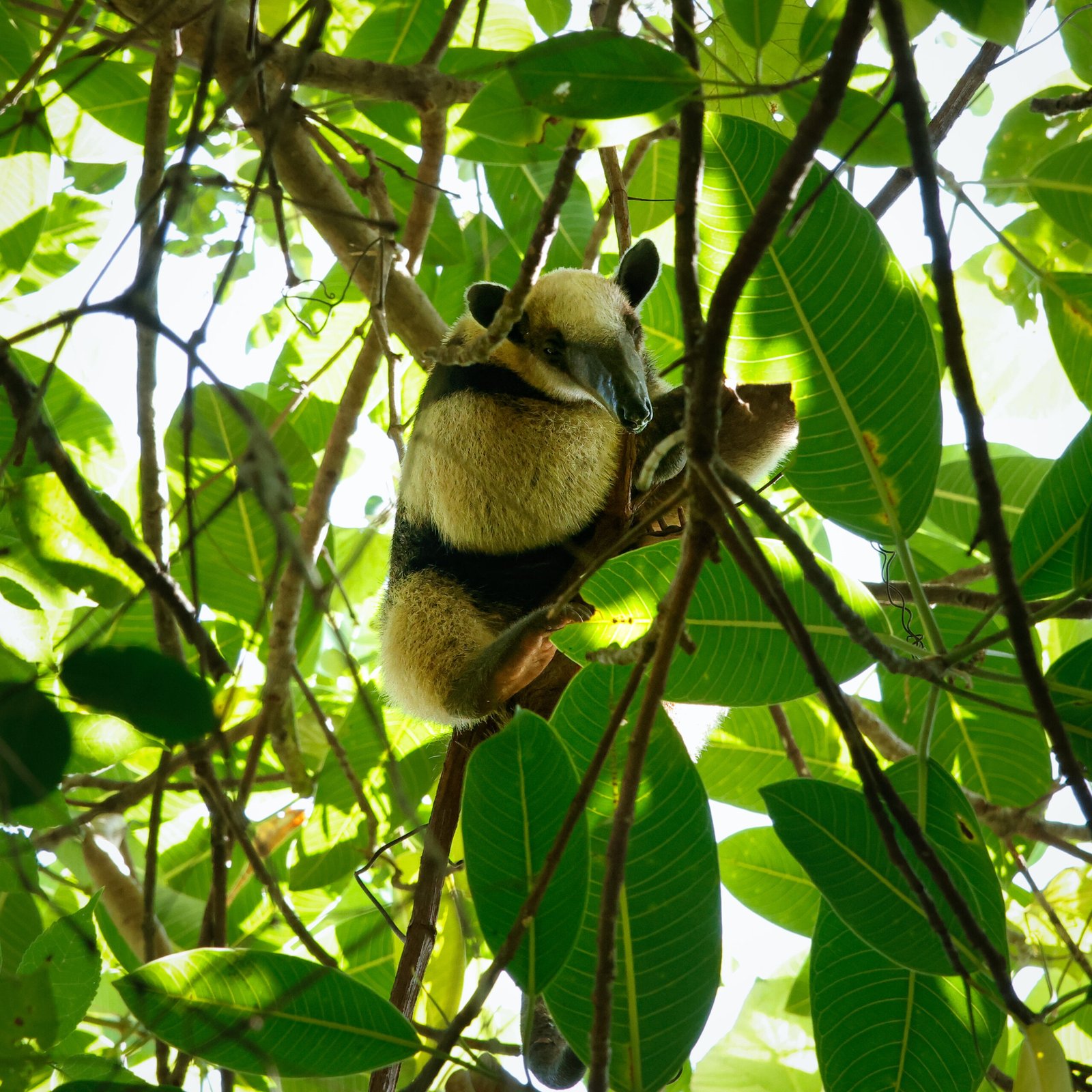
5. Northern Tamandua
The Northern Tamandua may not be the best-known animal in Tayrona, but it’s one of the most exciting to spot.
Quiet, solitary, and mostly active after sunset, this remarkable anteater moves gracefully through the trees, often without making a sound. Even experienced wildlife guides can walk right past one without noticing it.
That’s exactly what makes every sighting feel so rewarding.
Where can you find it?
Mostly in forested areas such as Cañaveral and Arrecifes, especially during the early morning hours.
Best time to spot it
5:00–7:00 a.m.
It can also be seen shortly after sunset if you’re exploring with a good flashlight on a night tour.
Guide's Tip
Arrive before sunrise, stay quiet, and keep your eyes on the upper branches. A small movement in the canopy is often the first clue that a tamandua is nearby.
Did you know?
Despite its name, the Northern Tamandua isn’t a bear. It’s a type of anteater that uses its long, powerful claws to break open termite mounds and ant nests before feeding with its sticky tongue.
Spotting difficulty
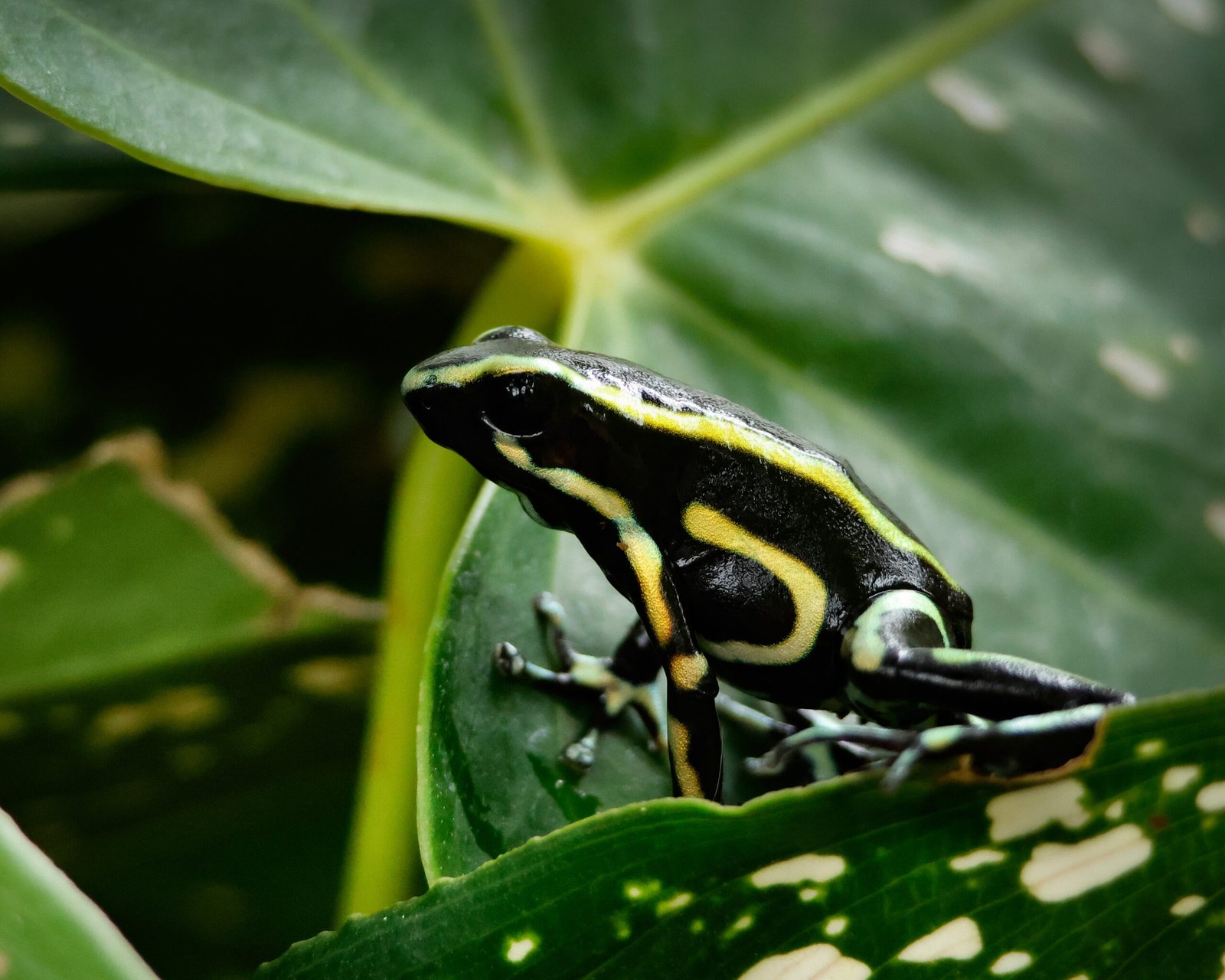
4. Yellow-striped Poison Dart Frog
Small, colorful, and surprisingly difficult to find.
The Yellow-striped Poison Dart Frog may only be a few centimeters long, but spotting one in the wild is always a memorable moment. Its bright yellow, orange, or golden colors aren’t just beautiful—they’re nature’s way of saying, “Don’t touch.”
These vibrant colors warn predators that the frog carries toxins in its skin, making it a species that’s best admired from a respectful distance.
Despite its tiny size, finding one hidden among the damp leaves of the rainforest is incredibly rewarding for wildlife enthusiasts and photographers alike.
Where can you find it?
In humid forest areas with plenty of leaf litter and dense shade, where the forest floor stays cool and moist.
Best time to spot it
Early in the morning or shortly after rainfall, when the frogs become more active.
Guide's Tip
Slow down and pay close attention to the forest floor. During the breeding season, males produce a soft buzzing call that sounds surprisingly similar to a vibrating cell phone. Many people walk just a few steps away from one without ever noticing it’s there.
Did you know?
Those bright colors are more than just beautiful. they’re a natural warning signal called aposematic coloration, which tells predators that this tiny frog isn’t an easy meal.
Spotting difficulty
3. Red Howler Monkey
You’ll probably hear this monkey long before you ever see it.
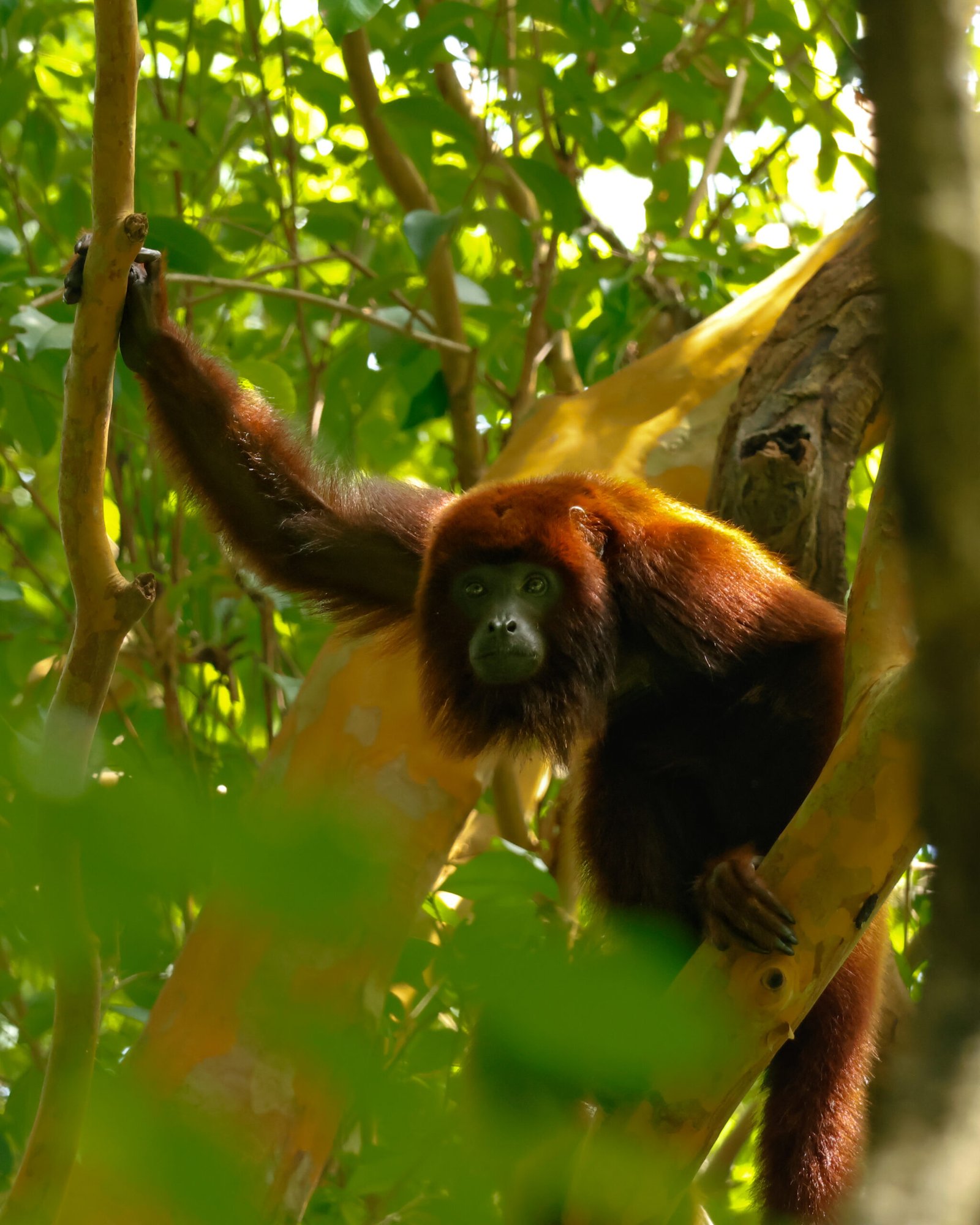
The Red Howler Monkey is the largest primate living in Tayrona National Park, and it’s famous for its incredibly powerful call. Its deep roar can travel for several kilometers through the forest, often surprising first-time visitors who mistake it for a much larger animal.
Although their voices are impossible to ignore, these monkeys spend much of their day quietly resting high in the treetops, where their reddish fur blends remarkably well with the surrounding vegetation.
Finding them often takes patience—but once you know where to look, it’s an unforgettable experience.
Where can you find it?
In mature forest areas throughout the park, especially along trails with tall, well-established trees.
Best time to spot it
At sunrise and again in the late afternoon, when the groups are most vocal.
Guide's Tip
If you hear a loud roar echoing through the forest, don’t keep walking. Stop for a few minutes, look up, and scan the treetops carefully. They’re often much closer than they sound.
Did you know?
The Red Howler Monkey has a specially adapted throat bone called the hyoid bone, which acts like a natural amplifier. Thanks to this unique feature, its calls can travel up to 4 kilometers (2.5 miles) through the forest.
Spotting difficulty
2. Cotton-top Tamarin
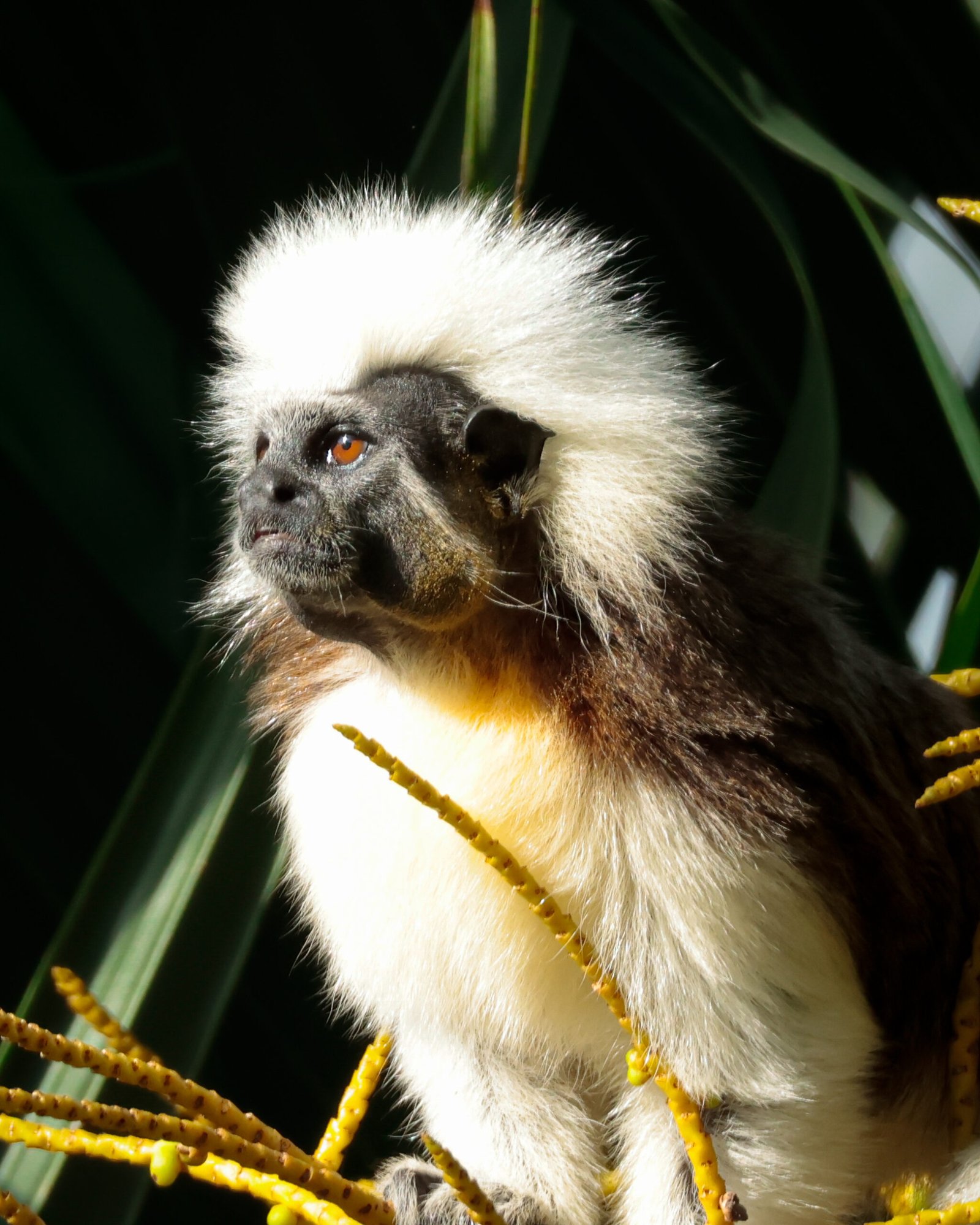
If there’s one animal that wildlife photographers instantly fall in love with, it’s the Cotton-top Tamarin.
With its striking white crest, expressive face, and endless curiosity, this tiny monkey is one of the most photogenic animals in Tayrona National Park. Every encounter feels special, whether you’re watching it leap effortlessly through the trees or pause for a brief moment to observe you from above.
But this little primate is much more than a beautiful subject for a photograph.
The Cotton-top Tamarin is found only in Colombia and is listed as Critically Endangered. Habitat loss and the illegal pet trade have caused its population to decline dramatically, making every sighting a reminder of how important conservation efforts are.
Seeing one in its natural habitat is a privilege—and an experience few visitors ever forget.
Where can you find it?
They are most commonly seen in the forests around Cañaveral and areas near Arrecifes, where family groups move actively through the canopy.
Best time to spot it
6:00–8:30 a.m.
Early morning is when they’re most active, searching for food and moving through the trees.
Guide's Tip
Listen before you look. Their high-pitched calls often reveal their location long before you can spot them. Once they notice people, they sometimes pause for a few seconds—giving you the perfect opportunity to observe or photograph them.
Did you know?
The Cotton-top Tamarin is found naturally nowhere else in the world but Colombia, making it one of the country’s most unique and iconic primates.
Spotting difficulty
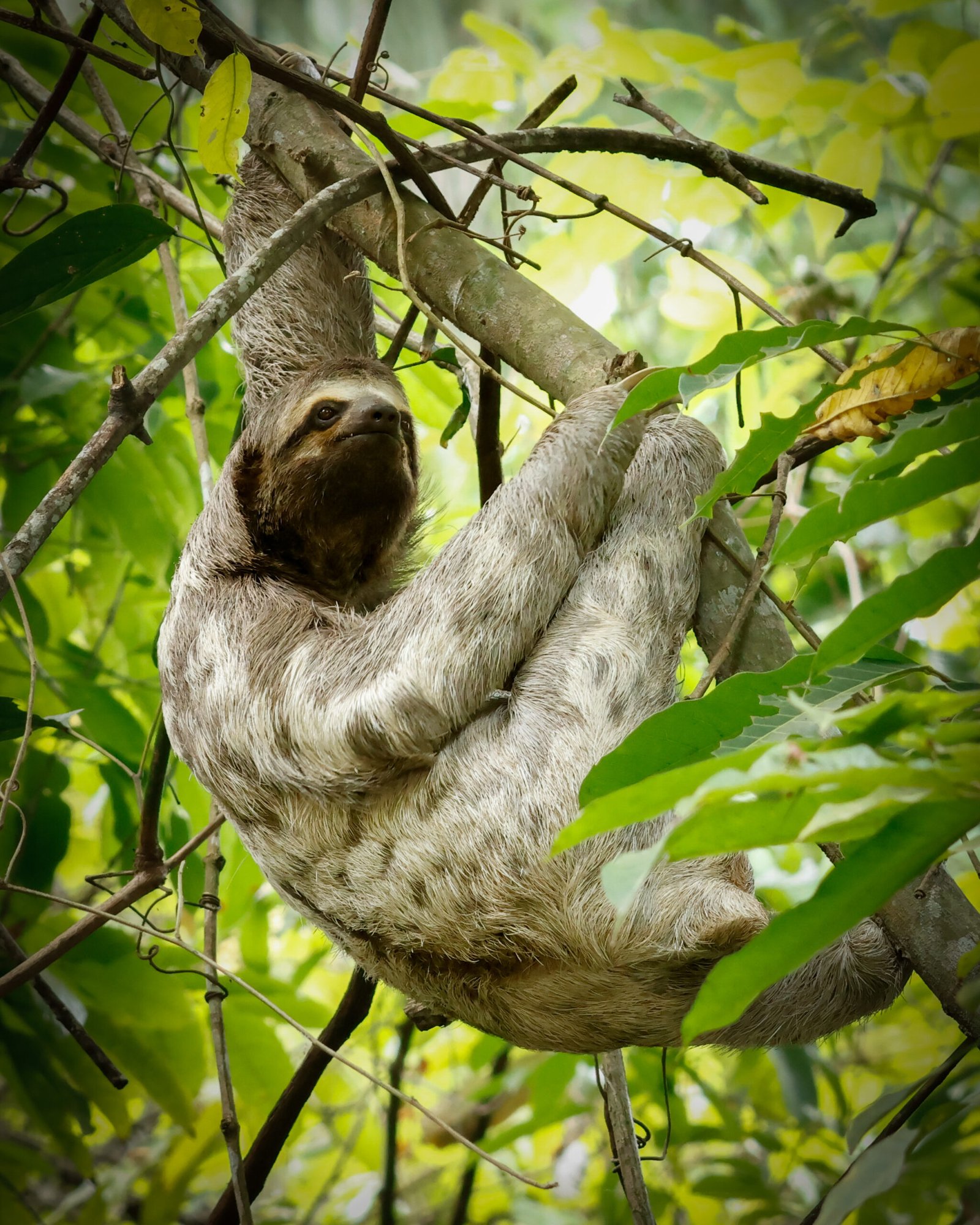
1. Brown-throated Three-toed Sloth
The Brown-throated Three-toed Sloth is, without a doubt, the wildlife sighting that most visitors hope for when exploring Tayrona National Park.
Its gentle expression, slow movements, and seemingly permanent smile have made it one of the park’s most beloved animals. Whether it’s your first time seeing a sloth or your tenth, the experience never loses its magic.
But spotting one isn’t always as easy as it seems.
Sloths are true masters of camouflage. Their fur blends perfectly with the surrounding vegetation, allowing them to disappear among the branches. It’s surprisingly common for visitors to walk right underneath one without ever realizing it’s there.
Then, suddenly, someone looks up…
A whisper spreads through the group.
There’s a sloth!
In an instant, everyone stops. Cameras come out, smiles appear, and for a few quiet moments, the forest seems to stand still.
It’s one of those simple moments that people remember long after they’ve left Tayrona.
Where can you find it?
They can be found throughout many forested areas of the park, especially where tall, mature trees provide plenty of cover.
Best time to spot it
From sunrise until mid-morning, when the forest is at its liveliest.
Guide's Tip
Don’t focus only on the trail ahead. Take your time scanning the treetops and look for rounded shapes or what seems like a clump of dry leaves. Sometimes, what looks like part of the tree turns out to be a perfectly hidden sloth.
Did you know?
The greenish tint often seen on a sloth’s fur comes from tiny algae that grow on its coat. This natural partnership helps the sloth blend into the forest canopy, making it even more difficult for predators, and people, to spot.